Temperature sensors and transmitters are used to measure ambient temperature or transmit sensor signals such as Pt100, Pt1000, thermocouple and mV to automation systems. You can explore wall-mounted room sensors, head-mounted transmitters and DIN rail temperature transmitters according to your requirements for measurement range, mounting type, 4-20 mA output, Modbus and HART communication.
Temperature sensors and transmitters ensure that temperature values measured in different environments and processes are reliably transferred to PLC, SCADA, controllers or data acquisition systems. This category includes both transmitters that convert signals from external temperature elements and room-type sensors that directly measure the ambient temperature where they are installed.
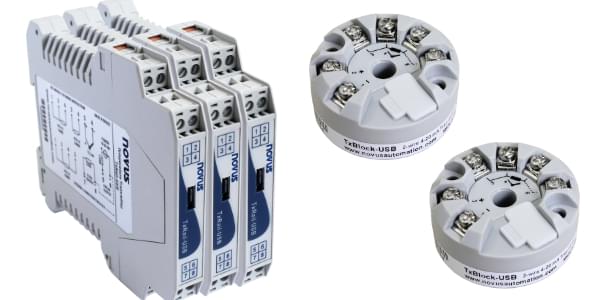
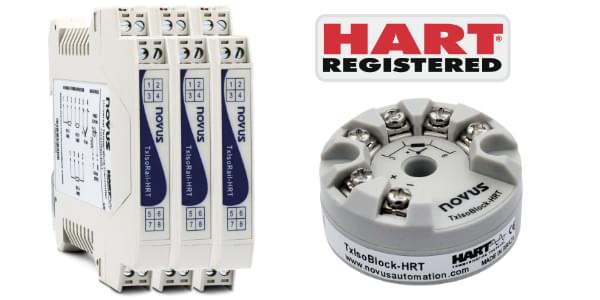
Head-mounted and DIN rail temperature transmitters convert low-level sensor signals such as Pt100, Pt1000, thermocouple and mV into industrial standard outputs such as 4-20 mA. This allows temperature data to be transmitted more reliably over long cable distances with greater resistance to interference and signal loss. HART-enabled models can also provide digital transmission of parameter settings, device information and diagnostic data in addition to the analog output.
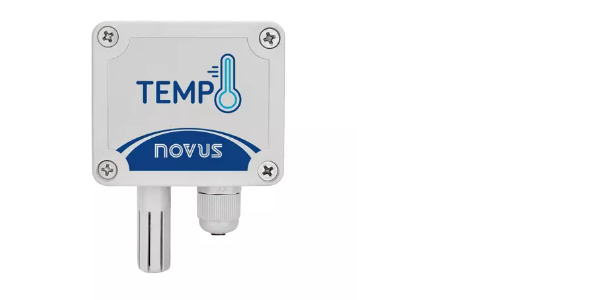
Wall-mounted room temperature sensors directly measure ambient temperature and transmit the value via a 4-20 mA output to building automation, HVAC, warehouse, laboratory, production area and technical room monitoring systems. These products provide a practical solution for applications requiring continuous ambient temperature monitoring without the need for an external temperature probe.
The first step in product selection is to determine whether the measurement will be taken directly from ambient air or through an external Pt100, Pt1000 or thermocouple sensor. Measurement range, accuracy, output signal, supply voltage, mounting type and the input structure of the control system should all be evaluated together.
For room-type models, installation location, airflow and proximity to direct sunlight or heat sources can affect measurement accuracy. When selecting a transmitter, factors such as sensor type, two-, three- or four-wire connection, isolation, configuration method and HART support are also important.
At Tesla Kontrol, we provide support in selecting the most suitable temperature sensor and transmitter for ambient temperature measurement, process temperature monitoring and converting sensor signals into 4-20 mA outputs.